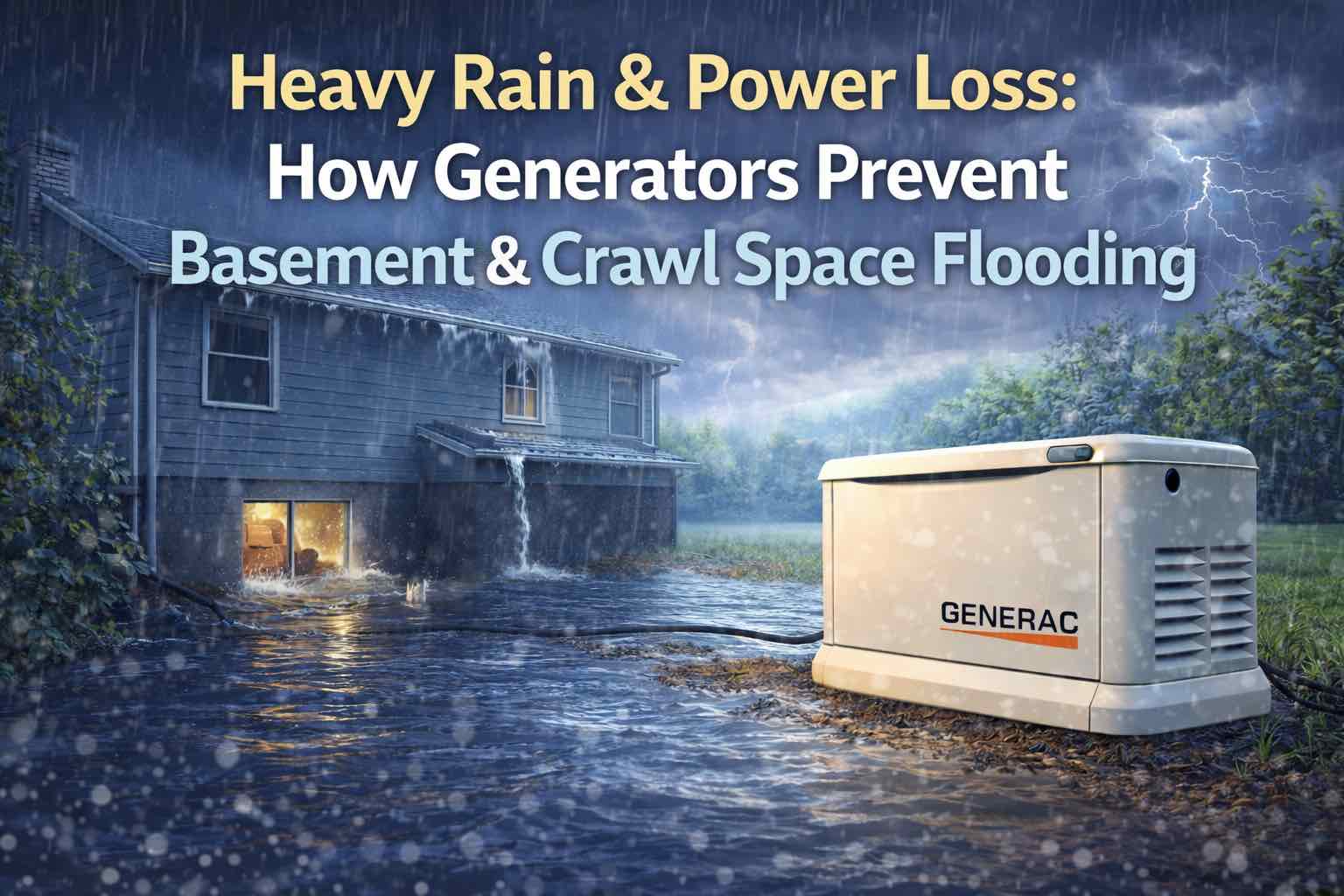
Heavy rainstorms don’t just bring thunder and lightning — they can also bring serious flooding risks. When intense rainfall hits and the power goes out at the same time, your home’s first line of defense, the sump pump, can stop working instantly.
Without backup power, basements and crawl spaces can begin filling with water in a matter of minutes. A standby generator helps prevent this costly damage by keeping critical systems running when the grid fails.
Why Heavy Rain and Power Loss Often Happen Together
During strong spring and summer storms, several things can happen at once:
- High winds knock down power lines
- Lightning damages transformers
- The electrical grid becomes overloaded
- Intense rainfall raises groundwater levels
This combination is especially dangerous for homes that rely on sump pumps. When the power goes out during heavy rain, water doesn’t stop rising — but your pump does.
How Sump Pumps Protect Your Basement
A sump pump removes water that collects around your foundation and directs it away from your home. It’s designed to turn on automatically when water levels rise.
However, sump pumps require electricity to operate. When power is lost:
- Water accumulates quickly
- Basement floors begin flooding
- Stored items are damaged
- Finished spaces can be destroyed
- Mold and moisture issues develop
In severe storms, flooding can occur in less than an hour.
Why Crawl Spaces Are at Risk Too
Homes with crawl spaces are also vulnerable. Standing water in crawl spaces can:
- Damage insulation
- Create mold growth
- Weaken structural supports
- Attract pests
- Cause long-term moisture problems
Because crawl spaces are often out of sight, flooding can go unnoticed until damage becomes extensive.
How Generators Provide Critical Protection
A whole-house standby generator automatically restores power within seconds of an outage. This keeps your sump pump operating continuously, even during prolonged storms.
Generators help prevent flooding by:
- Powering sump pumps without interruption
- Supporting backup battery systems
- Keeping dehumidifiers running
- Maintaining power to well pumps and drainage systems
Unlike portable generators, standby units activate automatically. There’s no need to go outside in heavy rain, set up extension cords, or refuel equipment.
The Cost of Flooding vs. The Cost of Prevention
Basement flooding can lead to:
- Damaged flooring and drywall
- Ruined furniture and belongings
- Electrical system damage
- Expensive mold remediation
- Insurance claims and deductibles
The cost of repairing water damage often far exceeds the investment in a properly installed generator.
Don’t Wait for the Next Storm
Heavy rain and power outages don’t follow a schedule. They happen suddenly — and often at night or when you’re away from home.
A standby generator provides peace of mind by ensuring your home’s flood protection systems remain active when you need them most.
FAQs About Generators and Flood Prevention
Will a generator automatically power my sump pump?
Yes, if it’s properly sized and connected through a transfer switch, your sump pump will continue operating during outages.
Is a battery backup enough?
Battery backups provide temporary support but may not last during extended outages. A generator offers longer-term protection.
Do generators protect crawl spaces too?
Yes. If your crawl space relies on sump pumps or dehumidifiers, a generator keeps those systems running.
Can flooding happen even after the storm passes?
Yes. Groundwater levels can continue rising even after rainfall stops, especially if the power remains out.
Protect Your Home Before the Next Storm
Flooding doesn’t just damage property — it disrupts your home and your life. Backup power ensures that heavy rain doesn’t turn into a major repair bill.
JLC Electrical Contractors provides professional generator installation designed to keep your sump pump and critical systems running during severe weather. Contact JLC today to make sure your home is protected before the next storm hits.