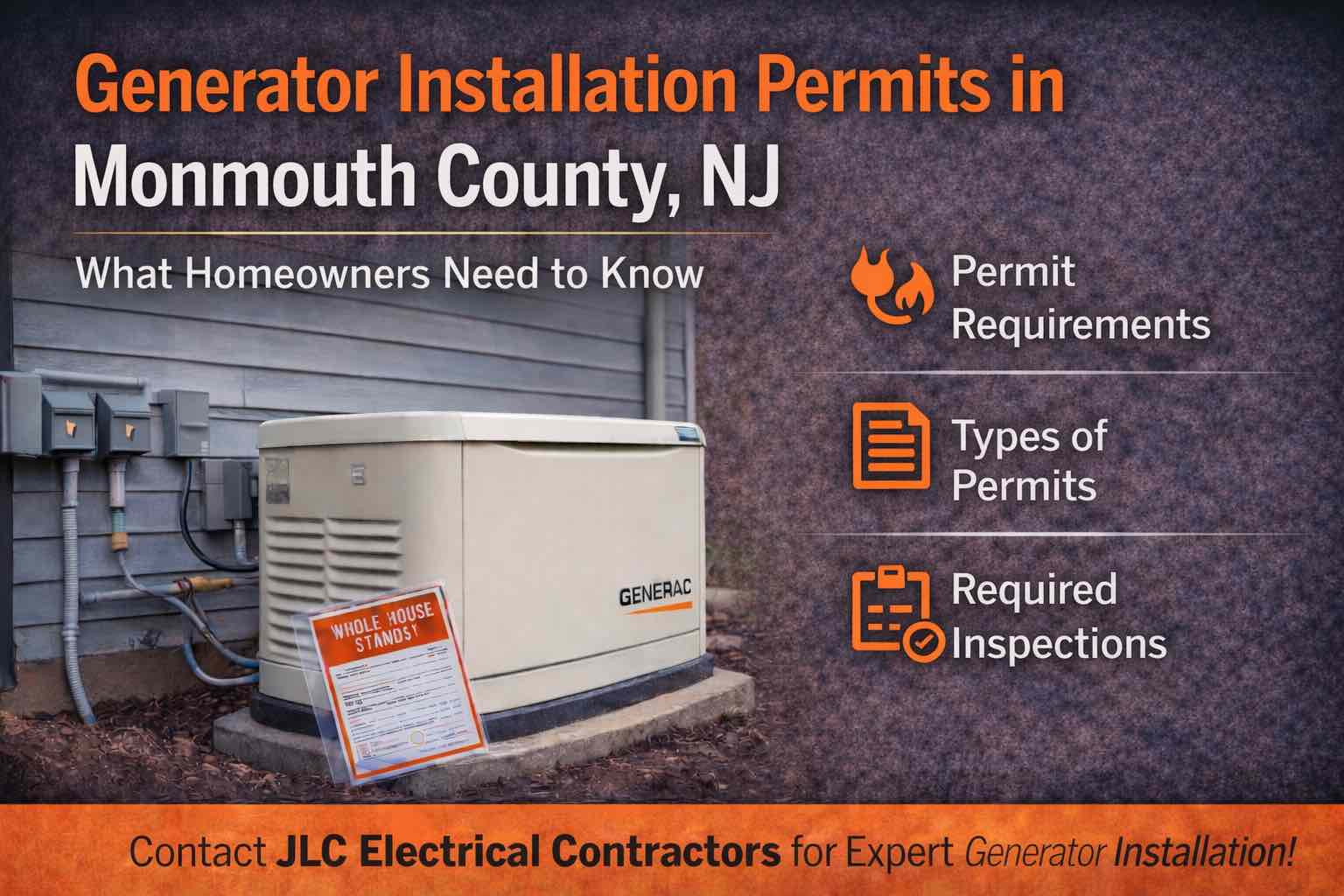
Installing a whole-home generator is one of the best ways to protect your home from unexpected power outages. In Monmouth County, New Jersey, where coastal storms and severe weather can impact power reliability, backup power has become a smart investment for homeowners. Before installation begins, it’s important to understand the permit process and what’s required to ensure everything is done safely and up to code.
Do You Need a Permit for Generator Installation?
In most cases, yes. Generator installation in Monmouth County requires permits because the project involves electrical work and, in many cases, gas line connections. Local municipalities enforce these requirements to ensure installations meet safety standards and comply with building codes.
- Permits are typically required for:
- Electrical connections to your home’s panel
- Installation of an automatic transfer switch
- Gas line installation or modifications
- Placement of the generator unit on your property
Skipping the permit process can lead to fines, failed inspections, and even issues when selling your home.
Types of Permits Required
Generator installations often involve more than one permit, depending on the scope of work.
Electrical Permit – This covers all electrical connections, including wiring the generator to your panel and installing the transfer switch.
Plumbing or Gas Permit – If your generator runs on natural gas a permit is required for any gas line work.
Zoning Approval – Some towns require zoning approval to ensure the generator is placed correctly on your property, meeting setback requirements and noise regulations.
Understanding Local Regulations
Each town in Monmouth County may have slightly different requirements, but most follow similar guidelines when it comes to generator placement and safety.
Setback requirements determine how far the generator must be from your home, property lines, and neighboring structures.
Noise considerations may restrict placement near windows or adjacent properties.
Elevation requirements can apply in flood-prone areas.
Working with a professional ensures these factors are addressed before installation begins, preventing delays or compliance issues.
The Inspection Process
After installation, inspections are required to confirm that all work meets local codes. These inspections are typically scheduled by the contractor and may include:
Electrical inspection to verify proper wiring and connections
Gas inspection to ensure safe and secure fuel supply
Final inspection to approve the overall installation
Only after passing inspection will your generator be fully approved for use.
How Long Does the Permit Process Take?
The timeline can vary depending on the municipality, but most permits in Monmouth County are approved within a few days to a couple of weeks. Factors that can impact timing include application accuracy, project complexity, and local workload.
Submitting complete and accurate documentation is key to avoiding delays.
Why Working With a Licensed Electrician Matters
Generator installation is a complex project that requires coordination between electrical, mechanical, and sometimes zoning requirements. A licensed electrician understands the local codes, permit requirements, and inspection process, ensuring everything is handled correctly from start to finish.
This not only saves time but also protects your investment and ensures your system operates safely and reliably when you need it most.
Planning on Having a Generator Installed in Monmouth County
JLC Electrical Contractors will handle the entire process from start to finish, including permits, applications, and inspections. Our licensed electricians ensure your system is installed safely, efficiently, and in full compliance with local codes, so you can have reliable backup power without the hassle.