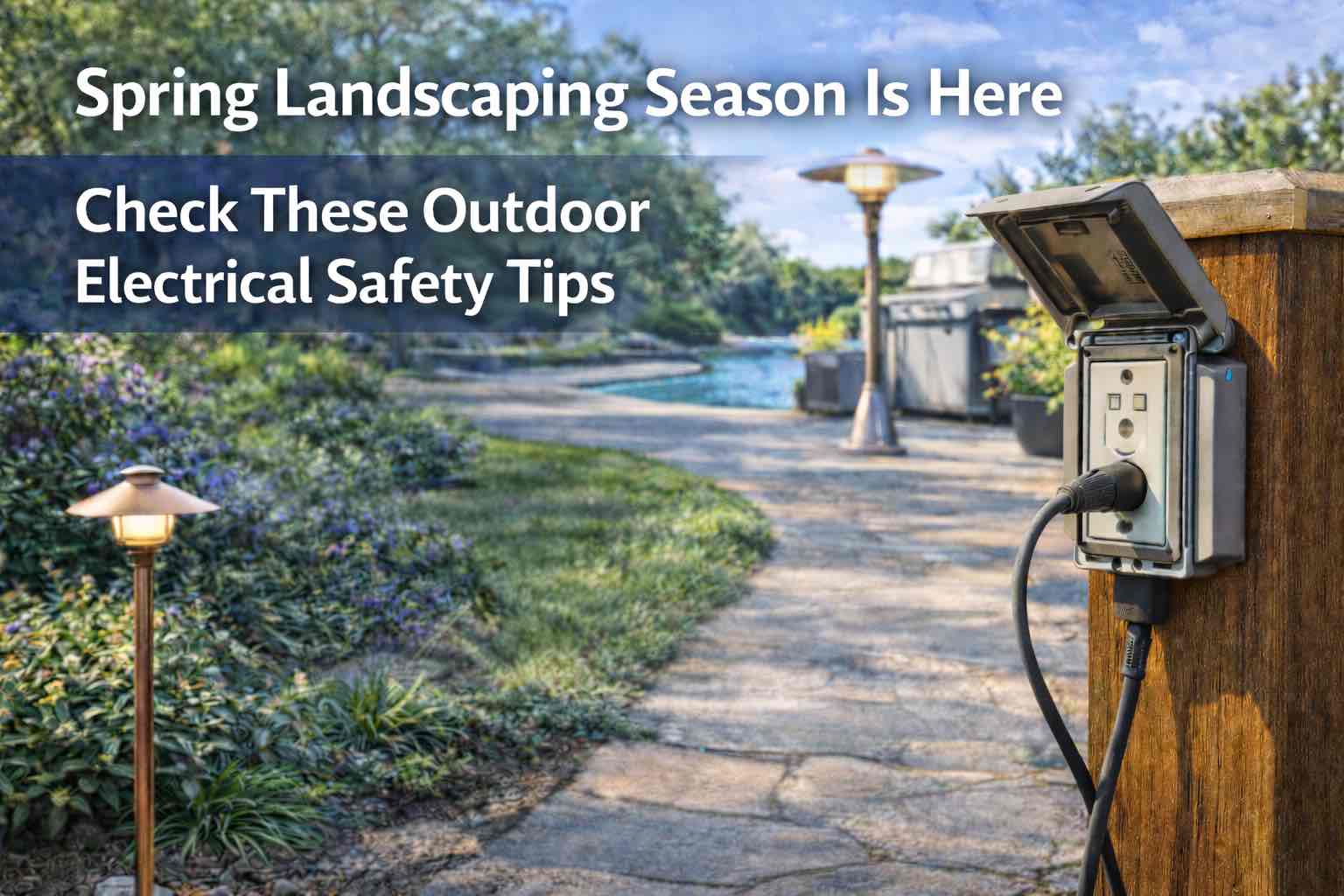
Spring is the perfect time to refresh your yard. Homeowners begin installing landscape lighting, setting up irrigation systems, adding outdoor kitchens, upgrading patios, and preparing pools for summer. While these projects improve curb appeal and functionality, they also introduce electrical safety considerations that shouldn’t be overlooked.
Before digging, installing, or connecting anything outdoors, it’s important to make sure your electrical system is safe, protected, and up to code.
Always Call Before You Dig
Many spring landscaping projects involve digging — planting trees, installing fence posts, adding irrigation lines, or building patios. Underground electrical lines may run through your yard.
Before starting any project:
- Contact utility marking services
- Confirm the location of underground power lines
- Avoid digging near marked areas
Accidentally striking an underground electrical line can cause serious injury and costly damage.
Use Outdoor-Rated Electrical Components
Outdoor environments expose electrical systems to moisture, temperature changes, and debris. Any outlets, wiring, or fixtures installed outside must be specifically rated for exterior use.
Look for:
- Weather-resistant outlets
- Outdoor-rated extension cords
- Properly sealed conduit
- Waterproof junction boxes
Using indoor-rated materials outdoors increases the risk of shock, corrosion, and system failure.
Install GFCI Protection
Ground Fault Circuit Interrupter (GFCI) outlets are essential for outdoor electrical safety. These outlets automatically shut off power if they detect an electrical imbalance, helping prevent shock hazards.
Outdoor areas that require GFCI protection include:
- Exterior outlets
- Pool areas
- Hot tubs
- Outdoor kitchens
- Garages
If your outdoor outlets are not GFCI-protected, it may be time for an upgrade.
Avoid Overloading Circuits
Spring projects often involve adding:
- Landscape lighting
- Water features
- Electric grills
- Patio heaters
- Pool equipment
Adding multiple devices to an existing circuit can overload your electrical panel. Frequent breaker trips or dimming lights are warning signs.
A licensed electrician can evaluate your system and add dedicated circuits if needed.
Protect Outdoor Lighting Systems
Low-voltage landscape lighting is popular in spring projects, but improper installation can still create hazards.
To ensure safety:
- Use outdoor-rated transformers
- Protect wiring from lawn equipment damage
- Bury cables properly
- Keep connections elevated and sealed
Improperly installed lighting can short out during heavy rain or cause premature failure.
Be Cautious Around Water Features
Water and electricity are a dangerous combination. Projects involving pools, fountains, irrigation systems, or pond pumps require special precautions.
Make sure:
- All equipment is properly grounded
- GFCI protection is installed
- Electrical components are positioned away from standing water
- Wiring meets local code requirements
Professional installation is especially important for pools and hot tubs.
Consider Surge Protection for Outdoor Equipment
Spring storms bring lightning and power surges. Outdoor electrical systems are particularly vulnerable.
Whole-home surge protection can help safeguard:
- Landscape lighting systems
- Pool equipment
- Outdoor entertainment systems
- Irrigation controllers
Protecting your system now can prevent costly replacements later.
Upgrade Your Panel If Necessary
As outdoor spaces become more advanced, electrical demand increases. If you’re adding multiple new systems this spring, your electrical panel may need evaluation.
Common upgrades include:
- Additional circuit breakers
- Panel capacity increases
- Dedicated circuits for large equipment
Addressing electrical capacity during landscaping projects prevents issues down the road.
FAQs About Outdoor Electrical Safety
Do outdoor outlets need special covers?
Yes. Outdoor outlets should have weatherproof covers designed to protect against rain and debris.
Is low-voltage lighting safer?
Low-voltage systems are generally safer but still require proper installation and weather protection.
Can I run extension cords permanently outdoors?
No. Extension cords are for temporary use only and should not replace permanent wiring.
Do I need a permit for outdoor electrical work?
Many outdoor electrical installations require permits and inspections. A licensed electrician can guide you through the process.
Make Safety Part of Your Spring Upgrade
Spring landscaping projects can dramatically improve your home’s appearance and functionality — but electrical safety must be part of the plan.
JLC Electrical Contractors provides professional outdoor electrical installations, panel evaluations, and safety upgrades to ensure your spring projects are both beautiful and safe. If you’re planning exterior improvements, schedule an electrical assessment before work begins.