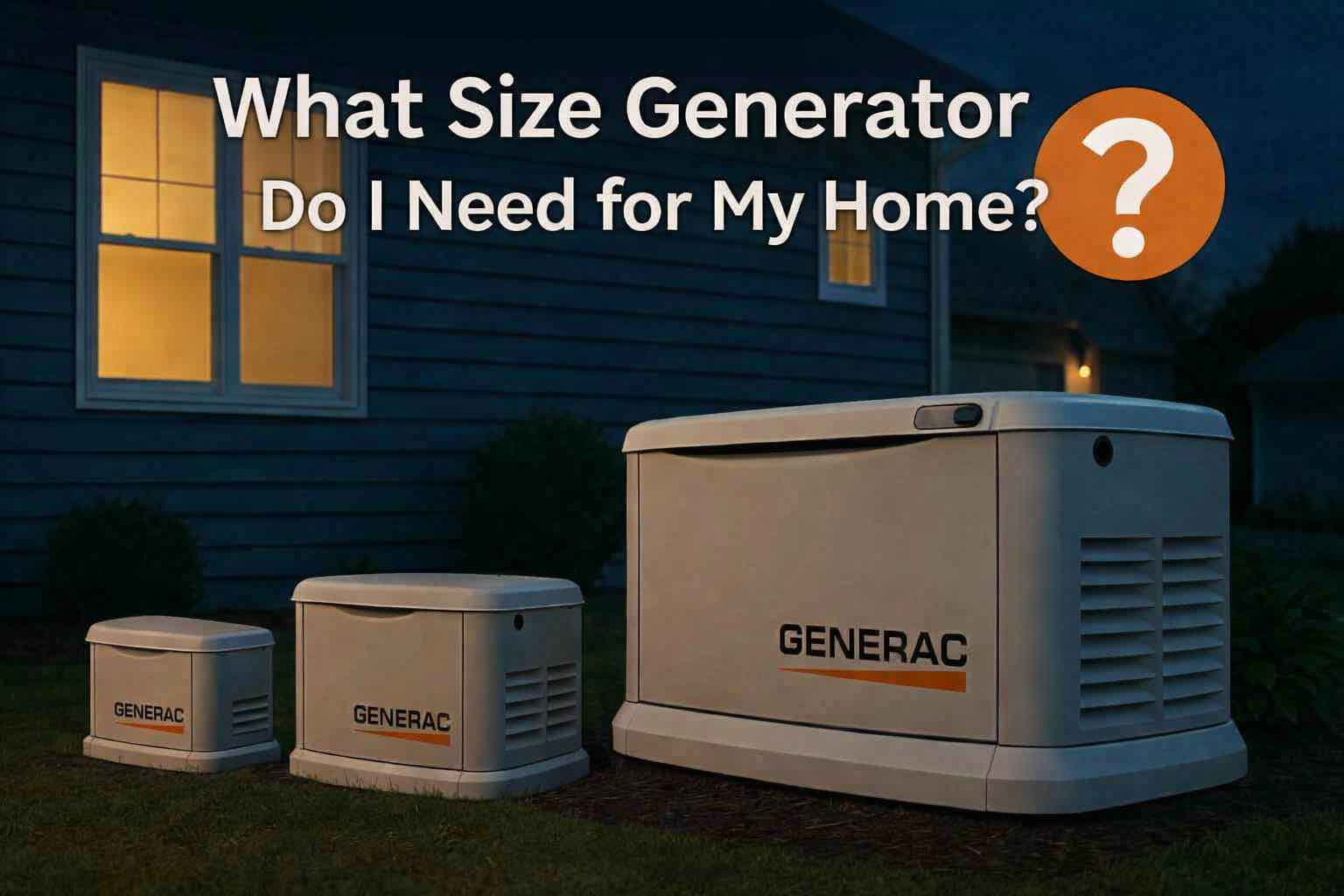
Choosing the right generator size is one of the most important steps in protecting your home during power outages. A generator that’s too small won’t run essential systems, while an oversized unit can cost more than necessary. The right size depends on your home’s electrical needs, not just square footage.
Here’s how homeowners can determine what size generator makes sense for their home.
Why Generator Size Matters
A properly sized generator ensures your most important systems stay powered without overloading the unit. If a generator is undersized, it may shut down, struggle to start appliances, or fail when demand increases. Oversizing can lead to higher upfront costs and inefficient operation.
The goal is reliable, balanced power when you need it most.
What Needs Power During an Outage?
Start by identifying what you want to run when the power goes out. Common essentials include:
- Heating system or boiler
- Air conditioning or heat pump
- Refrigerator and freezer
- Sump pump
- Well pump (if applicable)
- Lighting and outlets
- Internet and home office equipment
- Medical devices
- Garage doors and security systems
Some homeowners want only essentials powered, while others prefer full-home coverage.
Generator Size by Home Type (General Guidelines)
These are rough estimates. A professional load calculation is always recommended.
- Small homes or essentials only: 7–10 kW
- Medium homes with heating, sump pump, and appliances: 14–18 kW
- Larger homes or whole-house coverage: 20–24+ kW
Homes with electric heat, multiple HVAC systems, or larger square footage often require higher capacity units.
Appliances Matter More Than Square Footage
Square footage is helpful, but appliance load is more important. High-demand items such as electric dryers, ovens, HVAC systems, and well pumps significantly increase generator size requirements.
Two homes of the same size may need very different generators based on what they run.
Fuel Type Plays a Role
Most standby generators run on natural gas or propane. Fuel availability affects run time and performance, but not the size requirement. A professional assessment ensures fuel supply and generator capacity are properly matched.
Why a Professional Load Calculation Is Essential
A licensed electrician evaluates:
- Electrical panel capacity
- Starting wattage vs. running wattage
- Code requirements
- Transfer switch configuration
- Future electrical needs
This ensures your generator starts smoothly, runs efficiently, and safely powers your home.
FAQs About Generator Sizing
Can one generator power my entire house?
Yes, if it’s properly sized. Whole-house generators are designed to handle full electrical loads when calculated correctly.
Is it better to go bigger just in case?
Not always. Oversizing increases cost and may reduce efficiency. Proper sizing is more effective than guessing.
Will I need an electrical panel upgrade?
Sometimes. Older or undersized panels may need upgrades to support a standby generator safely.
How long can a properly sized generator run?
With the right fuel supply and maintenance, generators can run continuously for days or longer.
Can I add more circuits later?
Yes, but it may affect generator capacity. Planning for future needs is part of professional sizing.
Get the Right Generator the First Time
Choosing the right generator size isn’t about guesswork — it’s about understanding your home’s electrical demands. With proper planning, you’ll have reliable power, safe operation, and peace of mind during every outage. Take the guesswork out of generator sizing. JLC Electrical Contractors can assess your home and recommend the right standby generator for safe, reliable backup power.