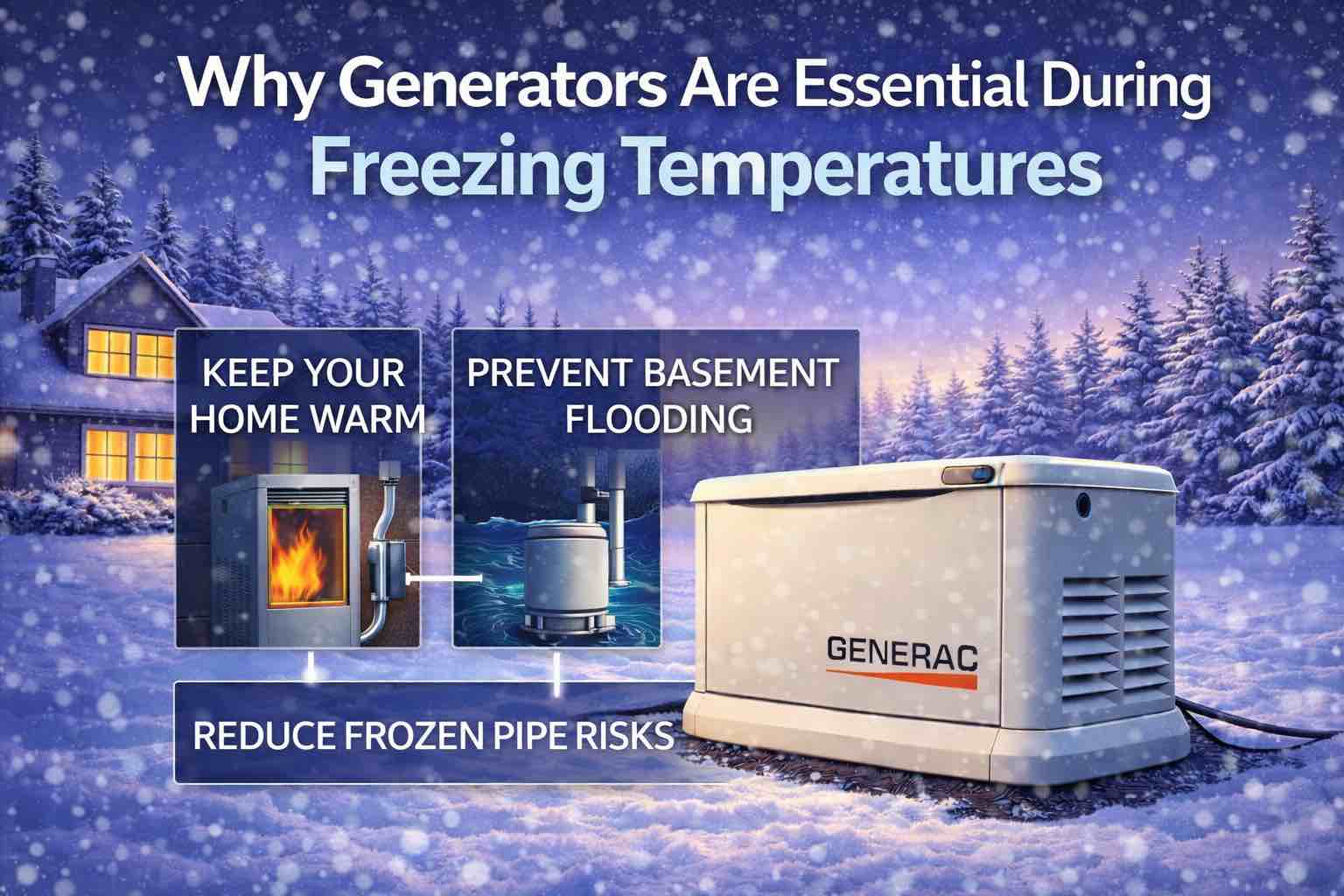
Freezing temperatures create more than just uncomfortable conditions — they introduce serious risks to your home when the power goes out. In winter, electricity isn’t just about convenience. It powers the systems that keep your home warm, dry, and protected from costly damage.
That’s why generators are especially essential during freezing temperatures.
Winter Power Outages Are More Dangerous Than You Think
Cold-weather outages often last longer than outages in other seasons. Snow, ice, and wind can delay repairs, while increased energy demand puts extra strain on the electrical grid.
When power is lost during freezing conditions, homes can quickly face:
- Loss of heat
- Frozen or burst pipes
- Flooded basements
- Food spoilage
- Unsafe living conditions
A generator helps prevent these issues by keeping critical systems powered when the grid fails.
Keeping Your Heat Running When Temperatures Drop
Heating systems rely on electricity, even if they use gas or oil. Without power, furnaces, boilers, and heat pumps shut down entirely.
A standby generator restores power automatically, allowing your heating system to continue operating. This helps maintain a safe indoor temperature and prevents your home from becoming unlivable during extended winter outages.
Maintaining heat is one of the most important factors in protecting both occupants and the structure of your home during freezing weather.
Preventing Frozen and Burst Pipes
When heat stops circulating, water in pipes can freeze quickly — especially in basements, crawl spaces, garages, and exterior walls. Frozen pipes often burst when they thaw, causing extensive water damage.
Generators reduce this risk by:
- Keeping heat running throughout the home
- Allowing water systems and well pumps to operate
- Preventing pipes from sitting idle in freezing conditions
The cost of generator installation is often far less than the cost of repairing water damage from burst pipes.
Protecting Sump Pumps During Winter Storms
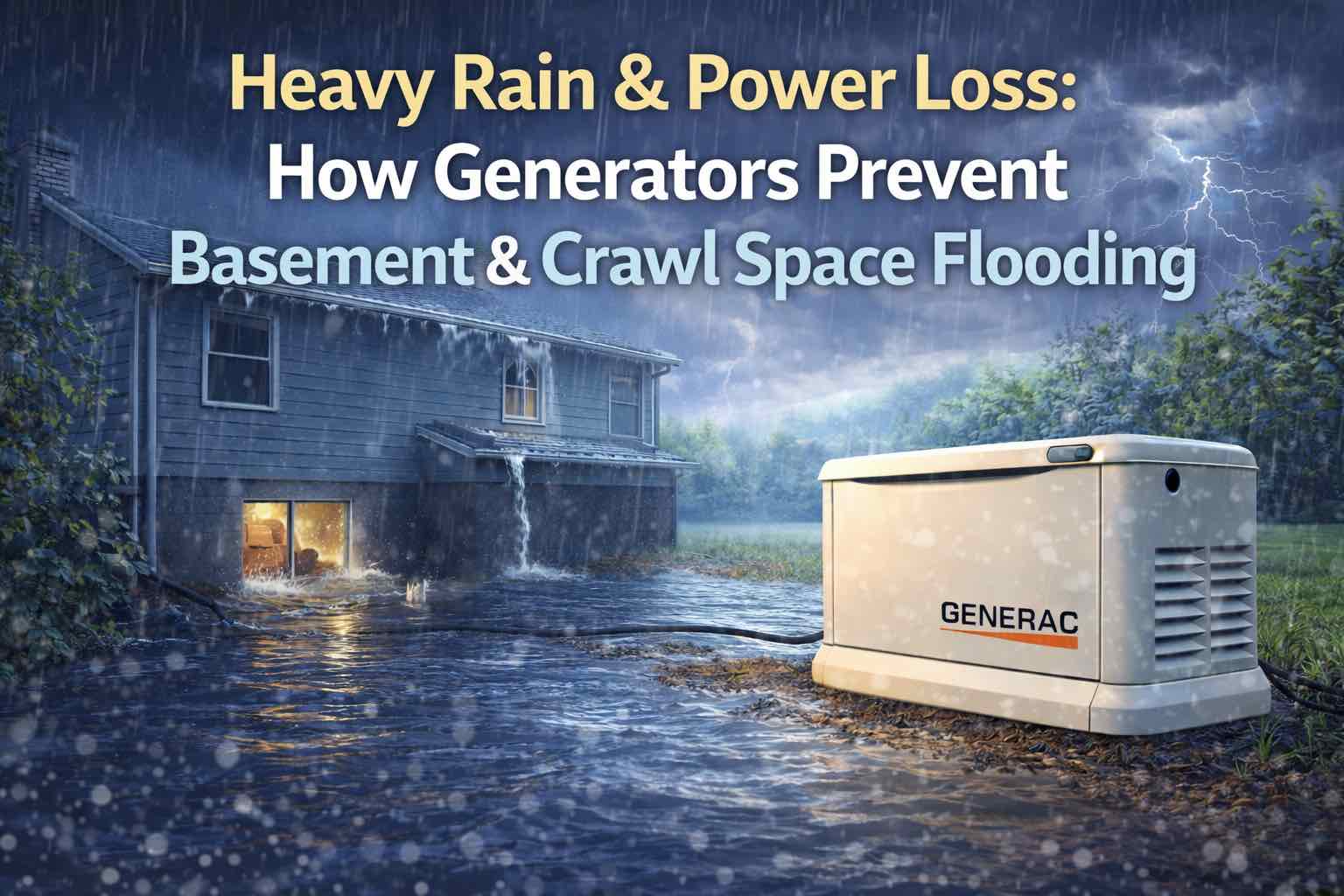
Winter storms often bring melting snow, ice, and rising groundwater. If the power goes out, sump pumps stop working — increasing the risk of basement flooding.
A generator keeps sump pumps powered during outages, helping protect finished basements, stored belongings, and your home’s foundation.
Supporting Medical and Safety Equipment
For homes with medical devices, mobility equipment, or temperature-sensitive needs, backup power is critical. Generators ensure these systems continue operating safely during freezing conditions, reducing health risks and stress during outages.
Automatic Power When You Need It Most
Whole-house standby generators turn on automatically within seconds of an outage. There’s no need to go outside in dangerous weather, refuel equipment, or manage extension cords.
This automatic response is especially important during freezing temperatures, when delays can lead to serious damage.
FAQs About Generators in Freezing Temperatures
Do generators work in extreme cold?
Yes. Standby generators are designed to operate in freezing conditions and can be equipped with cold-weather accessories for added reliability.
Will a generator keep my furnace running?
If properly sized, a generator can power your furnace, boiler, or heat pump during outages.
Can a generator prevent frozen pipes entirely?
While no solution is guaranteed, maintaining heat with a generator greatly reduces the risk.
Are portable generators enough in winter?
Portable generators provide limited power and require manual setup. Standby generators offer safer, automatic protection for critical systems.
Winter Protection Starts with Reliable Backup Power
During freezing temperatures, electricity becomes a critical utility that protects your home from damage and keeps your family safe. A properly installed generator provides dependable power when winter storms strike.
For homeowners in cold-weather regions, generators aren’t just a convenience — they’re an essential part of winter preparedness.